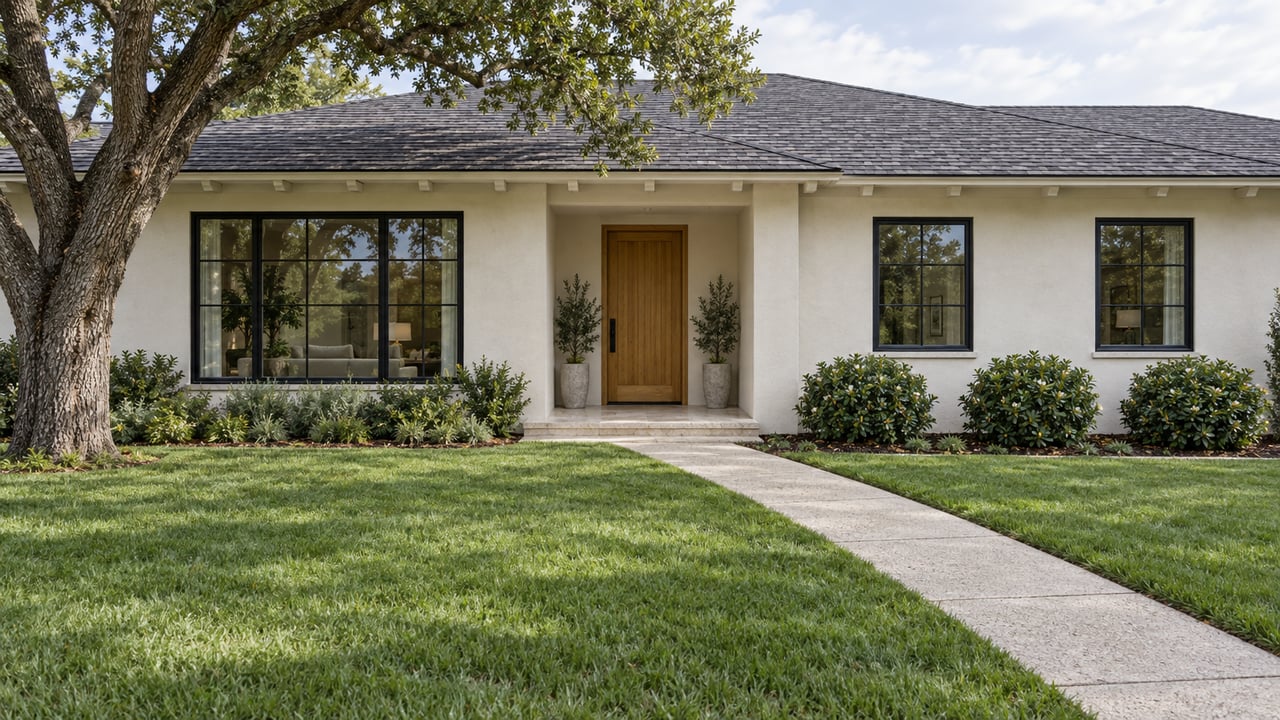
Burbank's Studio District Next to Toluca Lake Is Sized by Its Utilities
November 5, 2026
November 5, 2026
How many homes can the studio district on Toluca Lake's eastern edge add by 2035? In 2026, Burbank's answer dropped by more than 7,000 after the city checked the plan against its pipes, pumps and power supply.
The Burbank Media District covers about 544 acres in the southwestern corner of Burbank. Toluca Lake and Toluca Woods form its western edge. Magnolia Park sits to the north, South Keystone Street to the east, the Los Angeles River to the south, and State Route 134 runs through the middle. Burbank has spent four years rewriting the 1991 plan that governs it. The first version projected 9,702 new homes. The version now headed to City Council projects 2,258 through 2035, and the reason for the drop is in the city's own utility analysis, where the sewer system is the tightest constraint.
The original Media District Specific Plan was adopted in 1991, when heavy commercial development in the studio district was raising worries about nearby residential streets. It controlled how intensely the district could develop and set rules meant to protect the neighborhoods around it. According to the city, it had not been comprehensively updated in more than 30 years. The update began in 2022. Part of the push came from state housing laws that increasingly require streamlined review of qualifying housing projects based on objective standards.
The Draft Program EIR came out on February 7, 2026. Public comments focused on wastewater, along with the combined strain on water supply, wastewater facilities and electricity. In response, the city went back and worked out the maximum density its existing and planned utility infrastructure could handle. The result is the Sustainable Infrastructure Alternative, or SIA. It went out in a Recirculated Draft EIR on July 11, 2026, and city staff now recommend it as the preferred project.
| Through 2035 | Original proposal | Sustainable Infrastructure Alternative |
|---|---|---|
| New homes | 9,702 | 2,258 |
| Non-residential space | 3,986,207 sq ft | 684,245 sq ft |
| Hotel rooms | 400 | 400 |
| Modeled average dry-weather flow into Beachwood Pump Station, all of Burbank's specific plans combined | about 10.8 MGD | about 8.6 MGD |
| Modeled peak wet-weather flow, same basis | about 26 MGD | about 20 MGD |
That is 7,444 fewer homes and 3,301,962 fewer square feet of non-residential space than first proposed. The SIA reaches those numbers by cutting the number of redevelopment sites and lowering the density allowed on the sites that remain. In other words, the plan's maps changed along with the projection. The staff report says the density and intensity maps in the plan's Chapter 7 were revised to match the SIA.
Within the plan area, sewage flows in two directions. The part south of the 134 drains by gravity to the Los Angeles North Outfall Sewer. The part north of the freeway drains to the Beachwood Pump Station, which pumps it to the Burbank Water Reclamation Plant for treatment.
The city's June 2026 sewer analysis estimates Beachwood's capacity at about 7.2 million gallons per day. It models inflow from the Media District together with Burbank's other specific plans. Under the original proposal, that combined inflow reaches about 10.8 MGD on an average dry day. Under the SIA scenario it is about 8.6 MGD, still above the station's estimated capacity. The analysis says handling the projected peak flows would require significant upgrades to the pumping station, and that the reclamation plant in its current form could not take those peaks. The Recirculated Draft EIR describes the plant as having limited remaining capacity, with average treatment of about 8.5 MGD. The SIA would add about 1.3 MGD, and the EIR lists headworks upgrades, new primary clarifiers and a larger equalization basin among the possible improvements.
Under the SIA, water and power look less tight. The same EIR finds enough water supply under the modeled conditions. It puts the SIA's electricity demand at about 12 megawatts, against a forecast 69 megawatts of remaining capacity at Burbank Water and Power.
That makes infrastructure the pacing item for growth next door. The November 10 staff report says adopting the plan has no fiscal impact by itself. Longer-term infrastructure improvements may need city funding later, through the annual budget and the Capital Improvement Program, and the city will use the plan's technical studies to set development impact fees. Whether and when those upgrades happen will decide how much the district can grow, and the zoning map alone does not answer that.
Cutting the total also shapes where new buildings go. The final plan concentrates new higher-density housing on central sites, mainly along Alameda and Olive avenues near current and future transit. It calls for intensity to taper off toward lower-scale residential areas. The staff report puts it more simply: development potential is "generally concentrated toward the center of the Plan Area, away from existing lower-scale residential neighborhoods."
The plan's maps cover a wide range. Density categories run from 0 to 87 homes per acre, and height categories from 40 to 205 feet. The plan also describes a buffer zone and graduated heights:
The plan sets the rules for future projects. Several sites near the Toluca Lake edge already have a history of their own.
The city's economic development page for the Media District lists 3700 Riverside Drive under current development. It describes a mixed-use project with condominiums, restaurant and retail space, a pocket park and parking. The same page lists 3201 W. Olive Avenue among SB 35 projects: a proposed mixed-use building with 144 rental units, 15 of them very-low-income, and 1,058 square feet of commercial space. When Urbanize LA covered the Olive Avenue proposal in 2022, it called the project Bob Hope Center Residential, a five-story building with public open space planned as Bob Hope Park.
Farther along Riverside, Urbanize LA reported in 2023 that a revised proposal for 4100 Riverside Drive called for 72 homes: 63 apartments and nine townhome-style condos, with eight affordable units and neighborhood retail. The district's biggest recent build was commercial. Urbanize LA reported in May 2023 that Warner Bros.' Second Century expansion was complete, adding about 800,000 square feet of offices in seven- and nine-story buildings.
At its September 28 public hearing, the Burbank Planning Commission voted 5-0 to recommend approval with the SIA as the preferred project. Commissioners discussed hotel uses, how the SIA would work after the 2035 planning horizon, and how the city coordinates land use with infrastructure investment. Public testimony covered hotels, the cost of future infrastructure upgrades and wildfire evacuation routes.
The remaining steps are on Burbank's agenda forecast, which the city notes can change:
Infrastructure improvements and related programs would come later, through future city action and budgeting.
Is the 9,702-home figure still the plan? Staff recommend the Sustainable Infrastructure Alternative, which projects 2,258 homes through 2035. The 9,702 figure was the original proposal.
Why would Burbank plan for fewer homes than its housing targets? Burbank's 2021–2029 state housing allocation is 8,772 units. The plan also cites a City Council goal of accommodating up to 12,000 homes by 2035. For the Media District, the city tied the projection to what its existing and planned utility infrastructure can carry within the 2035 horizon.
Where can I read the full plan and environmental documents? The final plan, the EIRs and the technical appendices are posted on the city's Media District Specific Plan site.
This post describes city planning documents. It is not legal advice, so anyone weighing a specific property should confirm how the rules apply with the City of Burbank or a qualified land-use professional.
If you're comparing homes on the Toluca Lake side of this boundary and want to learn more about the plan next door, Sally Greene can go through the plan maps and the November decisions with you. Let's Connect.
Stay up to date on the latest real estate trends.
Connect with a real estate professional who values trust, insight, and personal attention. Every step is guided by a deep understanding of what “home” truly means.