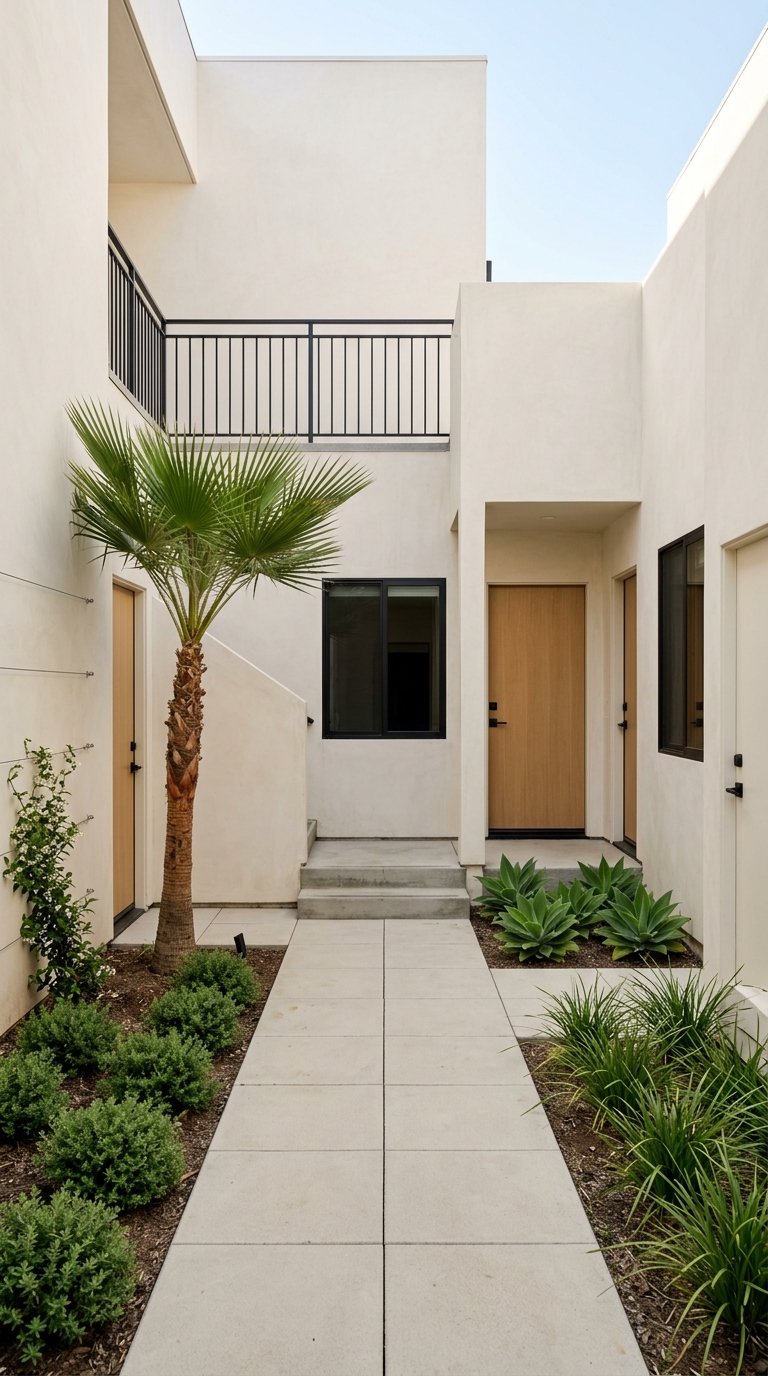
West Los Angeles Investment Property Options to Consider
July 16, 2026
July 16, 2026
If you are thinking about buying an investment property in West Los Angeles, one thing becomes clear fast: this is not a bargain market. Entry prices are high, rents are also high, and the best opportunities often come from careful planning rather than chasing a quick win. If you want to understand where rental demand, property type, and local rules meet, this guide will help you think through your options with more confidence. Let’s dive in.
West Los Angeles is a broad community-plan area that includes West Los Angeles, Century City, Pico-Robertson, Cheviot Hills, Rancho Park, and Sawtelle. It sits in a part of Los Angeles where many buyers and renters want access to established Westside neighborhoods, employment centers, and everyday amenities. That combination helps keep housing demand steady.
The numbers support that big-picture appeal. As of June 2026, Zillow’s West Los Angeles home value index was $1,457,595, while Realtor.com reported a median listing price of $1,042,500. Those figures use different boundaries and methods, but they point to the same reality: West LA is a high-cost market with a high barrier to entry.
It is also a renter-heavy area. RentCafe estimates that 72% of households are renter-occupied, with average apartment rent at $2,993 and average one-bedroom rent at $2,899 as of July 2026. Realtor.com reported a median rent of $3.8K, which reinforces the idea that rent levels can vary a lot by unit type and pocket.
For many buyers, West LA is more of a long-term positioning play than a short-term yield story. You are usually paying a premium to get into an established, supply-constrained, high-demand market. That means success often depends on realistic underwriting, patient holding periods, and close attention to local rules.
Realtor.com described West Los Angeles as a balanced market in June 2026, with homes selling at about 99% of list price and a median of 38 days on market. That can be helpful if you want eventual resale flexibility, but it does not suggest a friction-free flip environment. For most investors, a multi-year hold is the more grounded approach.
Condos and townhomes can offer a more accessible entry point than single-family homes in many parts of West LA. They may appeal to investors who want lower acquisition costs than a detached home, while still gaining exposure to a strong rental market. In practice, though, you need to look deeper than the property label.
In the City of Los Angeles, the Rent Stabilization Ordinance can apply to condominiums and townhomes built on or before October 1, 1978. LAHD says the rules depend on factors like building vintage and ownership structure, so a condo is not automatically exempt just because it is a condo. This is one area where details matter a lot.
State AB 1482 may also apply to many non-RSO units. That law caps many covered annual rent increases at 5% plus CPI or 10%, whichever is lower, and some properties are exempt if notice requirements are properly met. If you are evaluating a condo or townhome as a rental, the smart move is to review coverage unit by unit instead of assuming.
Small multifamily properties can be attractive if you want more than one income stream from a single purchase. In West LA, this segment tends to reflect stability rather than dramatic upside. You may be buying into consistent demand, but likely at a high basis.
Recent West Los Angeles multifamily research showed Q4 2025 vacancy at 4.6%, asking rent at $3,526 per month, median sale price at $527,300 per unit, and cap rates generally between 4.0% and 5.0%. A broader Los Angeles multifamily report showed 95.3% occupancy in Q1 2026. Taken together, those numbers suggest low vacancy and durable demand, but also a market where disciplined math matters.
There is also projected new supply to watch. The same multifamily research projected roughly 1,200 new units in 2026. That does not erase demand, but it does mean you should compare your target property against newer competition, especially if finishes, amenities, or unit layouts are dated.
If you are thinking about living in one unit and renting the other, or adding income through an ADU, West LA can offer interesting possibilities. But these strategies depend heavily on lot setup, zoning path, and the age of the original structure. The concept can work, but the details can change the numbers quickly.
Los Angeles City Planning says SB 9 is intended to streamline certain lot splits or two-unit development in single-family zones. LAHD also says ADU and JADU rent-control treatment depends on the original structure and whether the property is pre-1978. For example, detached ADUs on pre-1978 single-family lots are generally not subject to the RSO, although the original home may be affected if a second unit is created on the parcel.
That means a house-hack strategy in West LA should start with property-specific review, not assumptions. Before you rely on projected rent, make sure the lot, unit status, and rent-control framework support your plan.
West Los Angeles is best understood as a range market. Depending on the source, recent rent benchmarks include average apartment rent of $2,993, one-bedroom rent of $2,899, multifamily asking rent of $3,526, and median rent of $3.8K. Those numbers do not conflict as much as they show how different data sets capture different slices of the market.
For you as a buyer, the takeaway is simple: use broad rent data as a starting point, not your final underwriting number. The right rent estimate depends on unit size, condition, parking, building style, and exact location within West LA. A remodeled condo in one pocket and an older apartment in another may perform very differently.
One of the more encouraging signals for West LA investors is that vacancy has stayed relatively low. Northmarq reported 4.6% vacancy in Q4 2025, which suggests a market where well-positioned rentals can remain occupied. That said, no market-wide number can replace due diligence on a specific building.
A reasonable discussion point is a vacancy assumption around 5%, based on the market data. Still, your actual result may vary depending on lease-up timing, tenant turnover, pricing, and competition from nearby inventory. Conservative planning usually works better than optimistic forecasting.
Holding period matters too. With high acquisition costs, regulation, and transaction expenses, many West LA investment stories work better over time. If your plan depends on fast appreciation or a quick exit, this may not be the easiest market to force that outcome.
In Los Angeles, compliance is part of the investment model. For RSO units, LAHD says the allowable annual increase is 3% for July 1, 2026 through June 30, 2027. LAHD also states that utility-based add-ons are no longer permitted under the RSO as of February 2, 2026.
There are also reporting obligations. RSO rents must be reported annually through the rent registry by the last day of February. On top of that, the City’s Tenant Anti-Harassment Ordinance applies to all residential tenants in Los Angeles, not only RSO tenants.
For many non-RSO units, AB 1482 is the key framework to check. It limits annual rent increases for many covered units and may require just cause for termination after 12 months of lawful occupancy. Some newer construction and certain separately alienable properties may be exempt, but that should be confirmed carefully.
This is especially important for condos and townhomes in West LA. A property may look straightforward on paper, yet fall into a different category once you review build year, ownership setup, and notices. Good investment decisions here come from specifics, not shortcuts.
For higher-priced deals, transfer taxes can shape your exit math. The City of Los Angeles real property transfer tax applies to conveyances within the city, and Measure ULA adds extra tax above current thresholds. According to the Office of Finance, for transactions closing after June 30, 2026, the new ULA thresholds are $5.4 million and $10.9 million.
This will matter most for luxury single-family homes and larger portfolio sales, but it can also affect timing and net proceeds for some investor exits. If you are buying at the higher end of the Westside market, resale planning should include this from day one.
If you are exploring West Los Angeles, the strongest strategy is usually a disciplined one. Focus on property types you understand, realistic rent assumptions, and a hold period that gives the investment time to work. In this market, patience and precision often beat speed.
A practical checklist might include:
West LA can be a compelling place to invest, but it rewards careful buyers. If you want help evaluating condos, rentals, or small multifamily opportunities with a strategic, numbers-aware approach, Sally Greene can help you sort through the options and move forward with clarity.
Stay up to date on the latest real estate trends.
Connect with a real estate professional who values trust, insight, and personal attention. Every step is guided by a deep understanding of what “home” truly means.