Tarzana Neighborhood Lifestyle Guide for Space and Calm
June 11, 2026
June 11, 2026
If you want more room to breathe in Los Angeles, Tarzana often stands out for a simple reason: it feels less compressed than many other parts of the city. For buyers who care about lot size, quieter residential streets, and easy access to open space, that difference matters. Tarzana is not one single housing type or lifestyle, but it does offer a mix that many buyers find appealing when they want both calm and convenience. Let’s dive in.
Tarzana sits in the western half of the Encino-Tarzana Community Plan area, and the neighborhood has two distinct physical patterns. North of Ventura Boulevard, you will generally find flatter areas, while the land rises into hills to the south. That split helps shape both the look of the neighborhood and the way different parts of Tarzana live day to day.
City planning documents also help explain why Tarzana can feel more spacious than denser parts of Los Angeles. In the broader Encino-Tarzana profile, the area was reported at 1.5 dwelling units per gross acre and 58.7% owner-occupied housing during the 2016 to 2020 ACS period. In practical terms, that supports a more residential, lower-density feel than many central LA neighborhoods.
One reason buyers are drawn to Tarzana is that it is not one-note. You can find conventional single-family streets, areas with a mix of single-family and multi-density housing, and pockets with a more estate-like or semi-rural character. That range gives buyers more flexibility if you are balancing space, budget, and lifestyle goals.
The current community plan describes large estate-sized single-family lots south of Ventura Boulevard. Between the Ventura Freeway and Ventura Boulevard, the housing mix includes both single-family and multiple-density housing. That means your home search may look very different depending on which part of Tarzana you focus on.
Melody Acres is one of the clearest examples of Tarzana’s larger-lot identity. The city’s historic resources survey says the district covers about a quarter square mile, includes 313 parcels, and requires lots of at least half an acre. It also allows horses and livestock under its agricultural zoning, which is a rare feature within Los Angeles.
The same survey notes deep setbacks, narrow resident-maintained streets, and the absence of curbs or sidewalks. Those details create a more rustic feel and can make the area read as especially private and spacious. For buyers who want a neighborhood that feels removed from a tighter urban grid, that character can be a major draw.
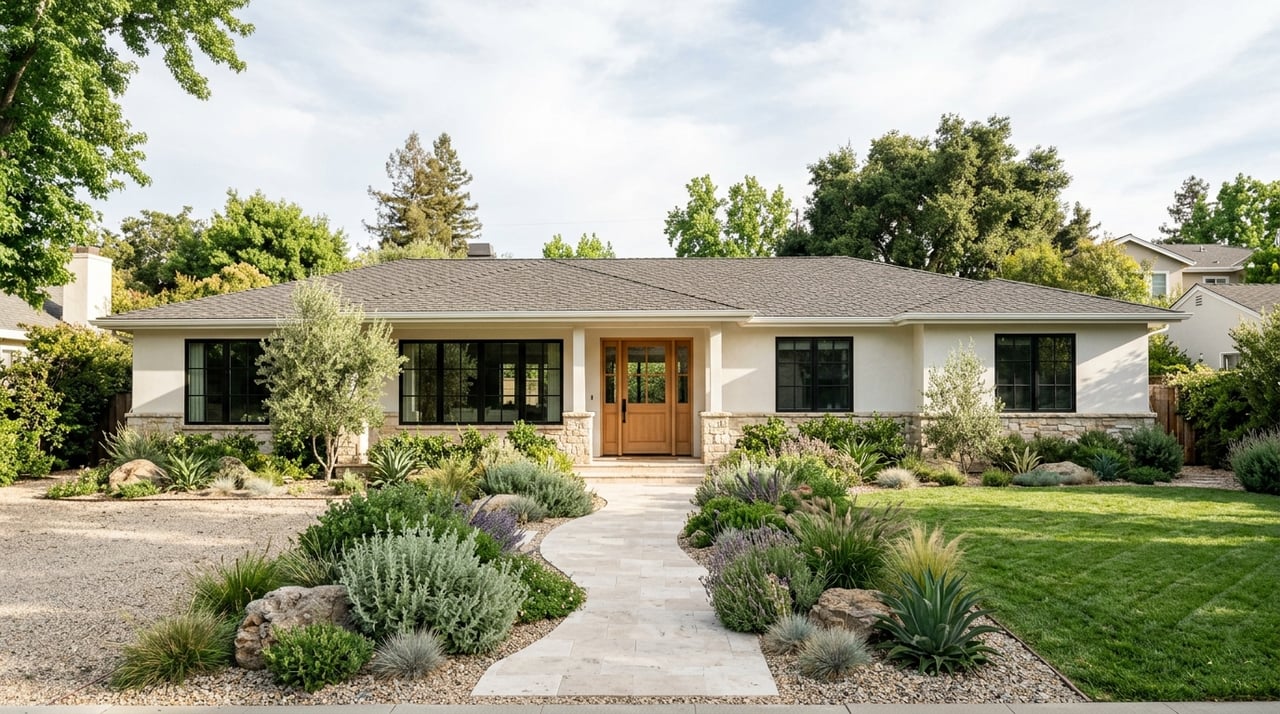
Tarzana’s appeal is not limited to large estates. Historic district documentation also describes areas just south of Ventura Boulevard with mostly single-family Traditional Ranch homes. These homes are noted for low, wide massing, moderate setbacks, and evenly distributed rectangular lots.
That kind of block pattern can appeal to buyers who want a classic Valley residential feel without needing a massive parcel. You may still get a sense of openness, but in a format that feels more familiar and easier to maintain. For many buyers, that balance is exactly the point.
A big part of Tarzana’s reputation comes from what surrounds it. Nearby open land, hillside terrain, and access to trail systems all contribute to the neighborhood’s more relaxed atmosphere. Even if you are not looking for a home on a huge lot, those nearby landscapes shape how the area feels.
Marvin Braude Mulholland Gateway Park covers 1,500 acres above the west San Fernando Valley. The National Park Service says it connects with Topanga State Park and the Big Wild, with its principal trailhead at the south end of Reseda Boulevard. That kind of large-scale open space is a meaningful advantage for buyers who value outdoor access close to home.
Caballero Canyon Trail is another reason Tarzana appeals to buyers seeking calm. Los Angeles County lists it as a 2.8-mile moderate trail with 558 feet of elevation gain, and it allows hiking, mountain biking, and horseback riding. It also connects to Dirt Mulholland and is accessed from the south end of Reseda Boulevard.
For many buyers, this matters because space is not only about square footage. It is also about how easily you can step outside, move around, and reset. Access to trails and hillside views can change the rhythm of everyday life in a way that is hard to measure but easy to appreciate.
Tarzana also includes large private recreational properties that reinforce its spacious identity. The city’s historic resources survey describes El Caballero Country Club as a private facility on more than 100 acres with a clubhouse, pools, tennis courts, and an 18-hole golf course. The same survey describes Braemar Country Club as a private facility on more than 200 acres rising into the hills, with multiple tennis courts, pools, and golf courses.
Not every buyer is looking for club access, and not every property relates directly to those amenities. Still, their presence contributes to the neighborhood’s overall land pattern and sense of openness. In a market where land and privacy often carry a premium, that context matters.
Calm does not have to mean isolated, and that is another part of Tarzana’s appeal. Ventura Boulevard is the neighborhood’s main commercial thoroughfare, and the city’s Tarzana Streetscape Plan covers 2.12 miles of it, extending along Reseda Boulevard from Ventura Boulevard to the Ventura Freeway. That corridor supports the daily errands, dining, and service stops many buyers want close by.
The same plan identifies a pedestrian-oriented area on Reseda Boulevard between Ventura Boulevard and Crebs Avenue and treats key freeway and Ventura Boulevard entries as community gateways. In everyday terms, Tarzana tends to function as a residential neighborhood with a strong commercial spine rather than a dense, walk-everywhere urban grid. For many buyers, that combination feels practical and comfortable.
Current Metro schedules list Line 150 as running through Chatsworth, Canoga Park, and Tarzana via Topanga Canyon Boulevard and Ventura Boulevard. That gives Tarzana a bus connection along key west Valley corridors. While the area is not defined by dense transit coverage on every block, there is service where much of the neighborhood’s activity is concentrated.
This pattern can be helpful if you want residential streets that feel quieter, while still having direct access to the area’s main commercial routes. It is another example of why Tarzana often appeals to buyers who want breathing room without giving up day-to-day functionality.
Tarzana’s pricing helps show what the market values here. Redfin reported a $1.1 million median sale price in March 2026, up 5.5% year over year. Zillow reported an average home value of about $1.20 million and said homes were going pending in around 32 days as of April 30, 2026.
Those are different metrics, but they point in the same general direction. Tarzana is a premium Valley market, and buyers appear to be paying for qualities like lot size, privacy, quieter residential patterns, and access to open space. In other words, the appeal is often tied less to central-city density and more to how the neighborhood lets you live.
If you are considering Tarzana, it helps to think beyond square footage alone. The neighborhood may appeal to you if you are looking for:
The right fit depends on your goals, budget, and how you want your daily routine to feel. Some buyers want a classic single-family block near shopping and dining, while others prioritize setbacks, larger parcels, or a more tucked-away setting. Tarzana offers enough variety to make that search worth a closer look.
If you are weighing Tarzana against nearby neighborhoods, a focused strategy can make a big difference. Knowing how the neighborhood changes from north to south, where lot patterns shift, and which areas best match your priorities can help you move with more confidence. If you want thoughtful guidance on buying in Tarzana or nearby Valley neighborhoods, connect with Sally Greene.
Stay up to date on the latest real estate trends.
Connect with a real estate professional who values trust, insight, and personal attention. Every step is guided by a deep understanding of what “home” truly means.